


Approved - knives withdrawn from private collections, checked, overhauled and certified by Coltelleria Collini
-
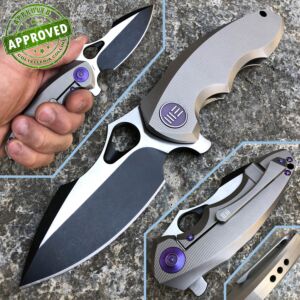
We Knife Co. - Framelock Flipper knife Dual Tone Gray - PRIVATE COLLECTION - 605E - knife
Knife withdrawn from a private collection - Model discontinued by WE KNIFE - Like new condition, with original packaging - Checked, certified by our internal laboratory Collini Cutlery
Intended use: Sports / Collection
Type of production: Industrial
Country of production: China
Blade: CPM-S35VN 59 / 61HRC stainless steel
Blade treatment: dual tone, satin & black PVD
Handle: 6AL4V titanium machined with numerical control
Blade length: 77mm.
Blade thickness: 4mm.
Length closed: 101mm.
Total length: 178mm.
Weight: 114g.
Closing: Framelock
Clip: 6AL4V titanium
Packaging: cardboard box with We Knife Co. logos
Notes: Carson Flipper opening system on ceramic ball bearingsWK-605E-CP€0.00Only 0 leftOnly 0 left Out of stock
 -

Piscitelli - Hunting horn hammered blade - CCC03/2 - artisanal knife
Piscitelli - Hunt horn hammered blade - CCC03/2 - handmade knife KNIFE WITHDRAWN FROM PRIVATE COLLECTION
- Type: Previously Purchased
- Condition: like new
- Available in commerce: NO the craftsman stopped producing knives a few years ago
- Sharpening: Original
- Marks on blade: NO
- Marks on handle: NO
- Packaging: YES
- Checked and Certified by our internal laboratory
Typical knife for the hunter. It is a robust and concrete knife. The tip is slightly lowered to work in cavities, and the blade has a deep curve for skinning.
Features:
- steel: AISI 420
- hardness: 54/56 HRC
- total length: 18cm
- blade length: 7.5cm
- blade thickness: 2mm
- weight: 68gr
- fittings: horn
- notes: handcrafted
- accompanied by a warranty certificate
Piscitelli has been making knives in Frosolone for three generations, a small town in the Molise hinterland known for its knife-making. The Art, Style and Tradition allow us to give importance and originality to our creations handed down from generation to generation.
Giovanni Piscitelli, born in Frosolone (IS). The passion for collection and hunting knives I inherited from my father (master craftsman) from whom I also inherited the most sophisticated techniques. My knives are unique pieces, strictly handcrafted.
When producing a knife, there are many elements that make a difference. In addition to a difference in value in the choice of materials, it is the labor required to perform certain operations, closely connected to the construction complexity that makes the knife more valuable. The reasons that justify the differences can also lie in the processing of the blade, or of the handle (elements that it is good to remember are modeled and finished exclusively by hand).
CCC03/2€0.00Only 0 leftOnly 0 left Out of stock


Sports, Outdoor, Tactical, and Collectible Knives: The Collini Selection
For over 50 years, Coltelleria Collini has been a reference point in Italy for the world of specialized cutlery. Since 1968, we have been selecting sports, outdoor, professional, and collectible knives, collaborating exclusively with official brands, historical manufacturers, and master artisans.
In this category, you will find thousands of original knives, chosen for demanding collectors, EDC, outdoor, and bushcraft enthusiasts, as well as professional operators who require reliability, quality materials, and consistent performance over time.
Military & Tactical Knives
Knives designed for heavy-duty and professional use, where robustness and reliability are paramount. We select world-leading brands such as Extrema Ratio, Zero Tolerance, Ka-Bar, and Cold Steel. Fixed and folding blades developed to withstand extreme conditions.
Sports & Outdoor Knives
From trekking to hiking, from bushcraft to everyday carry (EDC). Discover the Italian excellence of Fox Knives and LionSteel, the Nordic solidity of Fallkniven, and great classics like Opinel and Spyderco.
Collectible & Rare Knives
Custom, vintage, limited edition, and discontinued knives. Through our Approved program, we acquire, evaluate, and certify private collections, offering our customers access to rare, display, and investment-grade blades.
Why choose Coltelleria Collini since 1968
We are not just an e-commerce site, but a historic cutlery shop with direct experience on the products we offer. Buying from us guarantees:
- Certified Originality: we are official dealers for all brands we carry.
- Real Stock with fast shipping.
- Qualified Assistance and technical advice before and after sales.

Knives FAQ
There is no absolute "best" brand, but specific leaders for each use. For tactical and professional use, Extrema Ratio and Zero Tolerance are top tier. For outdoor and EDC, Fox, LionSteel, Fallkniven, and Spyderco excel.
Yes, buying sports and collectible knives online is generally legal for adults. However, laws regarding carrying and transporting knives in public vary significantly by country. Always check your local regulations.